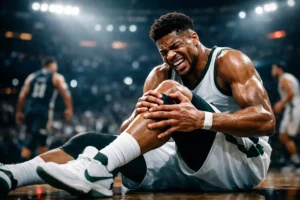
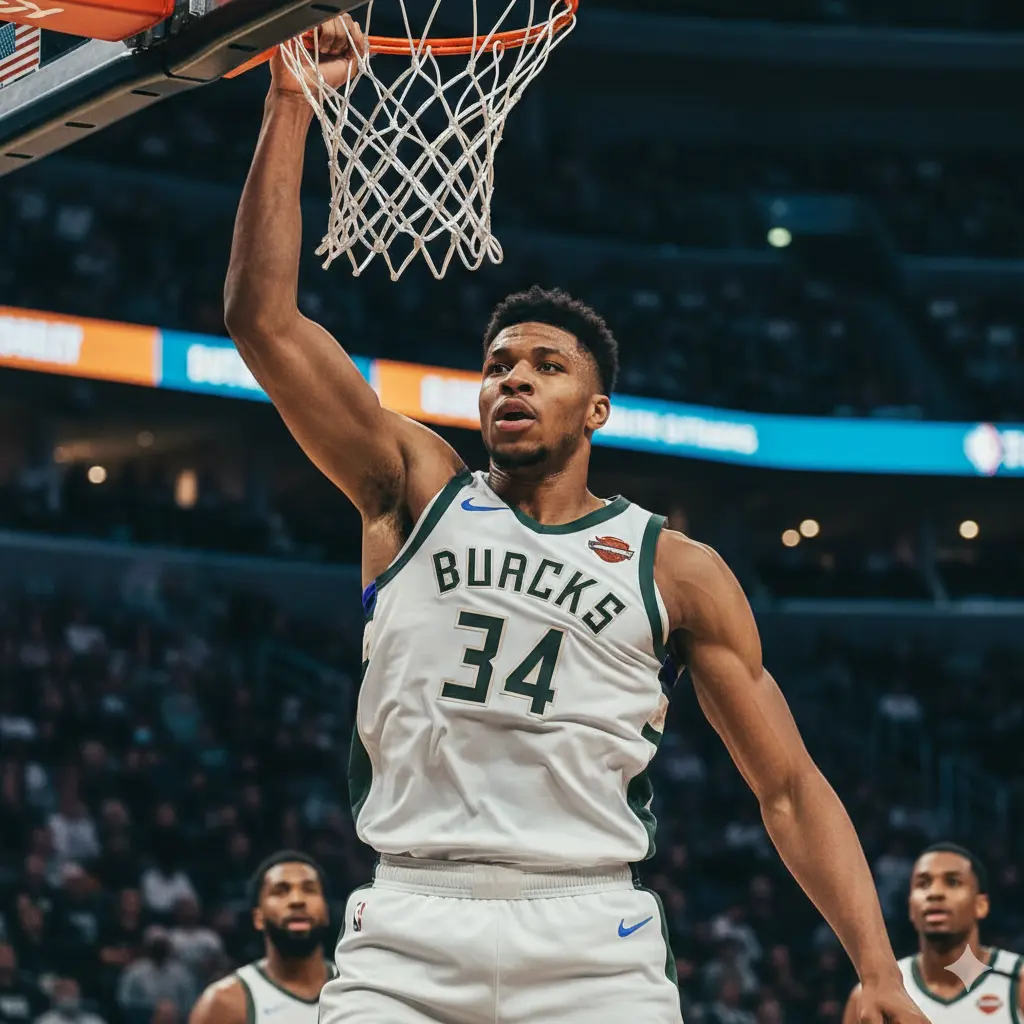
Giannis Antetokounmpo calf strain has forced the Milwaukee Bucks superstar into an indefinite absence, dealing a significant blow to the team’s momentum. The injury raises serious questions about Milwaukee’s short-term competitiveness and long-term championship hopes as the season intensifies.
The Milwaukee Bucks’ season, already teetering on the brink, has been thrust into a state of profound uncertainty. Two-time MVP Giannis Antetokounmpo is sidelined indefinitely after suffering a right calf strain, the same injury that plagued him earlier this season. With the organization offering no timetable for his return, the immediate on-court prognosis is bleak. However, this development forces a critical, long-overdue evaluation of the franchise’s trajectory, transforming a simple injury report into a pivotal moment that could define the Bucks for years to come.
The Injury: Diagnosis, History, and Immediate Impact
Giannis Antetokounmpo provided a sobering self-diagnosis following a loss to the Denver Nuggets, predicting a 4-to-6 week absence for what he felt was a calf or soleus strain. Head coach Doc Rivers later confirmed a calf strain, emphatically stating there is “no timetable” for the superstar’s return. This is not an isolated incident; it’s part of a troubling pattern. Antetokounmpo missed eight games in December with a right calf strain, sat out the 2025 All-Star Game with a left calf issue, and was sidelined for the entire 2024 playoff series against Indiana with a soleus strain. The repetitive nature of these soft-tissue injuries, particularly in his lower legs, raises significant concerns about his workload and long-term durability.
The immediate impact is severe. The Bucks’ record plummets without their cornerstone, falling to 3-11 this season when Antetokounmpo does not play. At 18-26 and 11th in the Eastern Conference, their streak of nine consecutive playoff appearances is in serious jeopardy. The team lacks both the depth and systemic cohesion to withstand such a loss, highlighting a roster construction that has failed to build a competent supporting cast around one of the game’s most dominant forces.
A Season Unraveling: On-Court Consequences and Statistical Reality
Milwaukee’s struggles extend beyond Antetokounmpo’s absence. Following a promising 4-1 start, the team has been among the league’s worst, ranking 24th in offensive rating, 21st in defensive rating, and 24th in net rating (-3.4). The offseason gamble to waive-and-stretch Damian Lillard and sign Myles Turner has failed to yield the desired spacing and defensive structure, leaving the team stylistically awkward and inconsistent. The loss of second-leading scorer Kevin Porter Jr. to an oblique strain further depletes an already thin rotation.
Antetokounmpo’s injury also has definitive award-season consequences. Having already missed 14 games, he will now certainly fall short of the 65-game threshold required for All-NBA and MVP consideration, ending a seven-year streak of First Team selections. His participation in the All-Star Game, for which he was voted a starter, is also highly unlikely, marking the second consecutive year he will miss the event due to calf problems.
The Strategic Crossroads: To Tank, Trade, or Retool?
Antetokounmpo’s indefinite absence forces the front office into a strategic reckoning ahead of the February 5 trade deadline. The path of incremental buying to chase a Play-In spot now appears futile and short-sighted. Conversely, the situation presents a potential silver lining: an opportunity to secure a high-value draft pick in a heralded 2026 class.
While the Bucks do not control their own first-round pick (it goes to the New Orleans Pelicans as the less favorable of the two), they are poised to receive the Pelicans’ pick, which is currently projected to be very high. A continued slide down the standings could secure Milwaukee a top-five selection—a rare chance to inject elite, cost-controlled young talent onto a roster sorely lacking it. This “strategic pause” could be the most rational path forward, allowing for player development, health recovery, and a reassessment of the core.
The Giannis Question: Trade Speculation and League-Wide Implications
The injury momentarily mutes, but does not eliminate, the league-wide speculation about Antetokounmpo’s future. The 31-year-old has one year remaining on his contract after this season and has publicly stated he would never request a trade. However, the combination of team performance, his injury history, and the final year of his deal has created palpable tension. Any potential trade before the deadline now seems less likely, as his health status complicates valuation for suitors.
Should the Bucks ever explore a trade, the league is divided into tiers of potential partners. Teams like the Detroit Pistons and Toronto Raptors possess the ideal blend of young talent, controllable contracts, and draft capital to construct an appealing package. The Oklahoma City Thunder have an enviable war chest of picks but are unlikely to disrupt a championship core. Others, like the Atlanta Hawks (who own the favorable 2026 pick between Milwaukee and New Orleans) or the San Antonio Spurs, could offer intriguing future-focused deals. However, any acquiring team would face the monumental risk of Antetokounmpo leaving in free agency in 2027 without a long-term commitment.
Long-Term Roster and Financial Constraints
Milwaukee’s options are hampered by past decisions. The $20.2 million annual dead cap hit from the stretched Lillard contract runs through 2030, acting as a significant drag on financial flexibility. The roster is old (fifth-oldest in the NBA) and lacks both tradable veteran salaries and promising young assets outside of a potential 2026 lottery pick.
This summer, the Bucks will be an over-the-cap team with limited mechanisms to improve. They can use the non-taxpayer midlevel exception ($15.1 million) and explore trades involving players like Turner, Kuzma, or Portis. However, a dramatic leap back into contention via free agency or trade without moving Antetokounmpo himself appears improbable, underscoring the gravity of their current predicament.
Frequently Asked Questions
What is Giannis Antetokounmpo’s exact injury?
Antetokounmpo has been diagnosed with a strain in his right calf. This is a re-aggravation of an injury that caused him to miss eight games earlier this season.
When will Giannis return?
The Milwaukee Bucks have provided no timetable for his return. Antetokounmpo himself initially estimated a 4-to-6 week recovery period based on his experience, but the team has not confirmed that timeline.
How have the Bucks performed without him this season?
The Bucks have a record of 3-11 without Antetokounmpo, compared to 15-15 with him, highlighting his irreplaceable value to the team.
Does this injury affect his All-NBA or MVP eligibility?
Yes. Having already missed 14 games, and with more absences certain, he will fail to meet the 65-game minimum required for major regular-season awards, ending several prestigious streaks.
Could the Bucks shut him down for the rest of the season?
Coach Doc Rivers stated there is “no thought to that” currently, but the decision will be re-evaluated based on the team’s standing and his recovery. If the Bucks fall out of contention, it would be a logical move.
What does this mean for the NBA trade deadline?
It likely takes the Bucks out of the “buyer” market and makes a major Antetokounmpo trade before the deadline far less probable due to the injury’s impact on his immediate value.
Do the Bucks have their own first-round pick in 2026?
No. The pick is conveyed to the New Orleans Pelicans as the less favorable of the two teams’ selections. The Bucks will receive the Pelicans’ pick, which is currently projected to be a high lottery selection.
What are the biggest obstacles to the Bucks improving the roster?
Major obstacles include the dead money from Damian Lillard’s contract, a lack of attractive trade assets, an aging core, and limited financial flexibility due to being over the salary cap.
Has Giannis Antetokounmpo requested a trade?
No, he has not. He has publicly stated he would never request a trade, though he has recently expressed frustration with the team’s performance and effort.
What is the most likely outcome for the Bucks this season?
The most likely outcome is missing the playoffs or Play-In Tournament, resulting in a high lottery pick that could serve as a key asset for a future roster reset or retool around Antetokounmpo.
Verdict
Giannis Antetokounmpo’s calf strain is more than a temporary setback; it is the catalyst for an unavoidable organizational audit. The indefinite timeline of his return exposes the frail foundation of the current roster and accelerates a looming decision about the franchise’s direction. While the instinct may be to view this through a short-term lens of playoff odds, the prudent path forward is one of strategic patience. Embracing the reality of this lost season to secure a premium draft asset, while allowing their superstar to fully heal, offers a clearer route to long-term competitiveness than a desperate chase for mediocrity. The Bucks’ future, and potentially Antetokounmpo’s tenure in Milwaukee, will be defined by how they navigate this moment of crisis. The coming months will reveal whether the front office can leverage this challenge into an opportunity for a necessary and thoughtful recalibration.
Watch More Sports
Related Coverage
related sports news | related sports news | related sports news